Japan / Florida
When the stitch does the work
A farmer’s overcoat and a Seminole jacket invite a closer look at what stitching actually holds together.
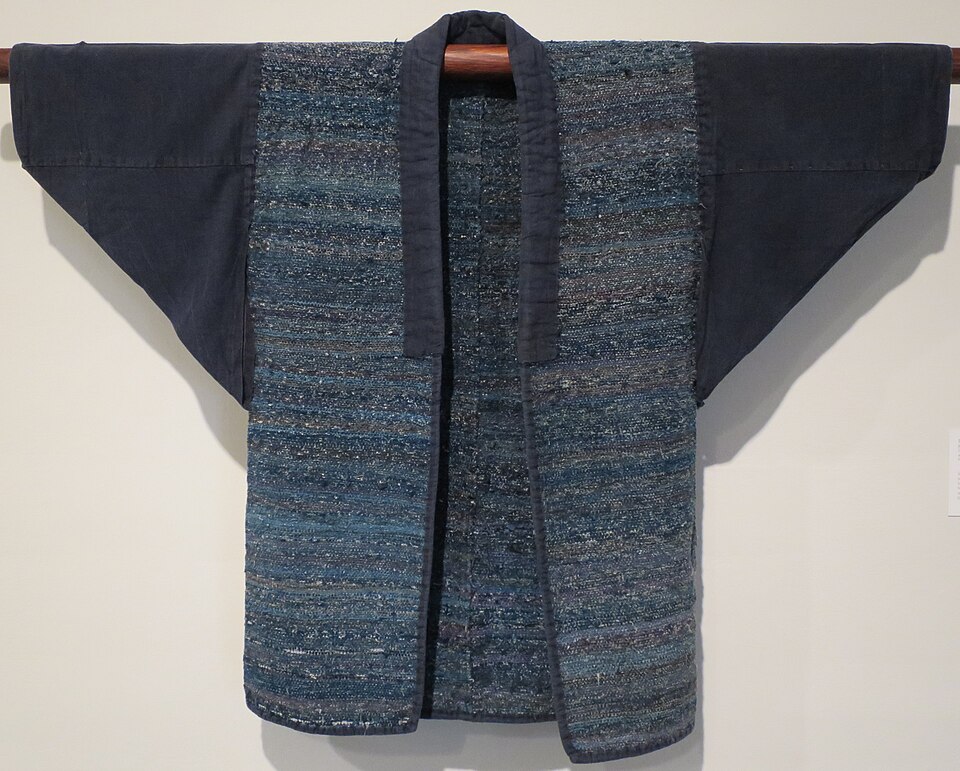 Sakiori work jacket from Niigata, Japan, 1912–26. Hiart · Honolulu Museum of Art collection · CC0
Turn a winter jacket inside out and the machinery of warmth comes into view. Something has to keep the layers together when an elbow bends. In its account of a Japanese farmer’s overcoat, the Met describes how makers in northern Japan stitched layers of plant-fiber cloth with cotton thread. The rows of running stitches associated with sashiko helped bind those layers into clothing for cold weather. Following one stitch across the surface means following a little piece of the coat’s construction.
For a different jacket, look at Lucy John Billie’s work from 1965. The Smithsonian identifies Billie as Seminole and records the jacket’s origin on the Big Cypress Reservation in Florida. Its brief materials list names cotton cloth and thread. The technique is sewn patchwork. Here a seam can join separate pieces into the surface of the garment itself. On the northern Japanese coat, thread also travels through the thickness of the garment. The distinction is small enough to miss in a photograph and large enough to matter to the wearer.
Try that test on a sleeve you own. Pinch the fabric on either side of a line of stitching. Does the line hold two edges together, trap a layer underneath, or attach a separate piece? Once the construction makes sense, look again at the whole sleeve. One of the pleasures of studying clothes is discovering just how much of their appearance depends on decisions most people only see from the inside.