Choctaw stickballWhat happens when the sleeves come off?
The detail that caught my eye in a Choctaw account of stickball was a player’s T-shirt with the sleeves cut off. Take a pair of scissors to a shirt and you change its silhouette, the way the shoulder feels and exactly where the cloth moves when you lift an arm.
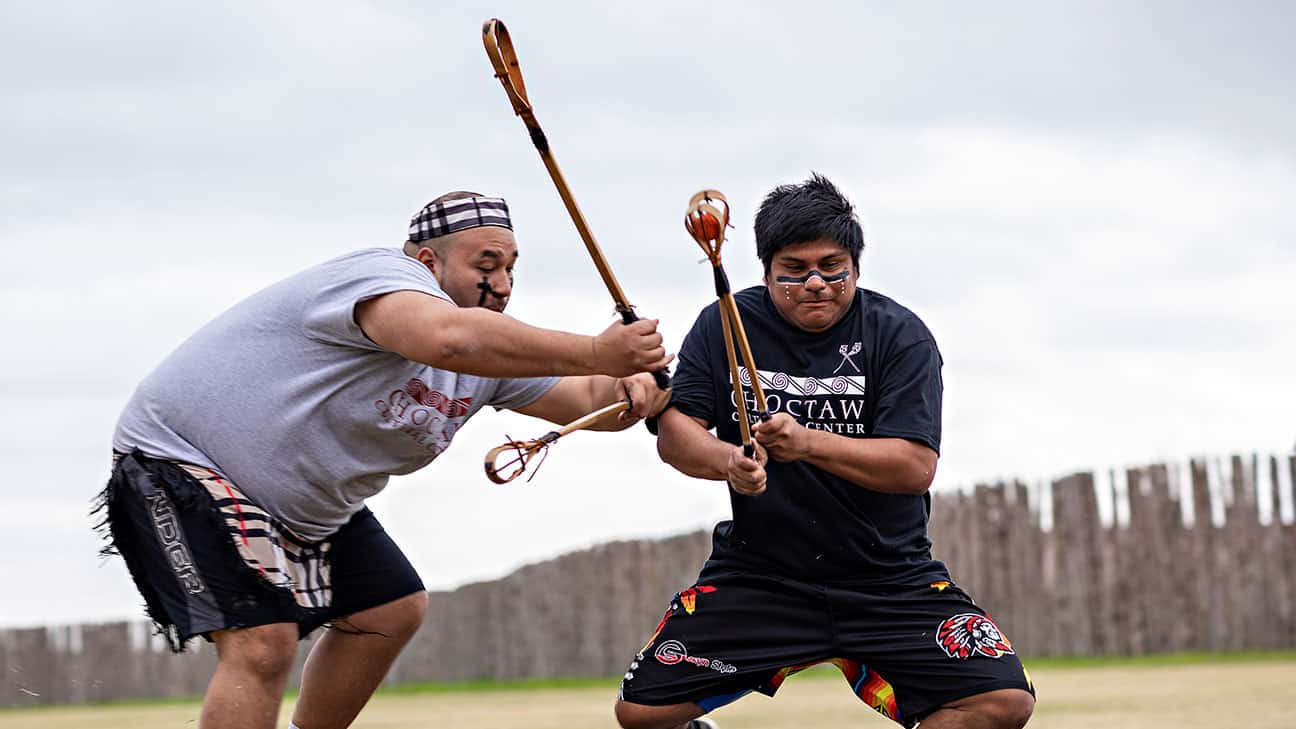 Look at the shoulders and hems as the players reach. This photograph shows a contemporary game. · Choctaw Nation of Oklahoma
The Choctaw Nation of Oklahoma describes earlier players taking the field barefoot in breechcloths, sometimes wearing clay paint. Each player carried two sticks called kapucha. Picture the space those two hands need: reach high with one, then out to the side with the other. As someone used to pulling a jersey over hockey pads, I find that a useful way to look at the outline of a stickball player in motion.
The Nation also documents players wearing shorts and T-shirts, including shirts with the sleeves removed. A change in clothes is one chapter in the history of a game people still gather to play. The account identifies the garments. The idea about shoulder room is my own design question; a player could have an entirely different reason for cutting a sleeve.
Try folding a T-shirt sleeve inward on one side in front of a mirror. Leave the other side alone. Even before you raise your arms, the same shirt seems to have two different attitudes. A small alteration can do a lot of work.